Thank you for stopping by. Please visit often for updates. The comments on this blog are mine and mine alone. All information provided is deemed reliable but is not guaranteed and should be independently verified. 

Insights and Tips for Real Estate in Hawaii


April 19, 2024

Navigating the Waves of Change: Honolulu's Short-Term Rental Laws

Honolulu County is at a pivotal moment in the regulation of short-term rental properties, with several bills and ordinances shaping the future of vacation rentals in this tropical paradise. As a hub of tourism, the impact of these regulations is significant for property owners, residents, and visitors alike.


The Current State of Short-Term Rental Laws

In recent years, Honolulu has taken steps to regulate the short-term rental (STR) market. Landmark legislation, Bill 89, was approved by the Honolulu City Council in 2019, aiming to preserve long-term housing and curb the growth of 'un-hosted' or 'whole-home' rentals. This bill set a cap on new home shares at 0.5 percent of the total number of dwelling units on the island and introduced strict enforcement provisions targeting hosting platforms like Airbnb and VRBO.

The Push for Further Regulation

Despite these measures, the STR industry continues to thrive, with reports indicating a growth rate of nearly 30 percent annually. This has led to a push for more stringent laws. Two bills moving through the Hawaii legislature could phase out STRs not occupied by their owner, addressing concerns about housing accessibility and the state's housing crisis.


The Impact on Housing and the Community

The proliferation of STRs has been linked to increased housing prices and a strain on Hawaii's limited housing inventory. In some regions, a significant portion of housing units are listed as STRs, which has led to calls for preserving long-term housing inventory for residents.


Opposition and Legal Challenges

Not everyone agrees with the proposed regulations. The Maui Chamber of Commerce and various industry stakeholders have expressed concerns about potential legal issues and interference with property rights. Legal battles have ensued, with a federal judge ruling that a group of Oahu STR owners may continue to operate despite new laws.


Looking Ahead: The Future of STRs in Honolulu

The future of STRs in Honolulu is still unfolding. Bills such as House Bills 820, 84, and 211 propose changes to short-term rental taxation, permitting authority, and advertising restrictions. A bill that would allow counties to phase out nonconforming single-family transient vacation rental units is making its way through the State Legislature.


What This Means for Property Owners and Renters

Property owners and renters must stay informed about the changing legal landscape. New permit systems and restrictions on the number of permits available for STRs are being implemented, which could affect the ability to operate vacation rentals. Additionally, there are proposals that could impact rentals for less than 90 days.


The Balance Between Tourism and Local Lifestyles

Honolulu's approach to STR regulation reflects a delicate balance between supporting tourism and preserving local lifestyles. The city's clear delineation between resort-zoned areas and the rest of the island is a testament to this effort.


Conclusion

As Honolulu continues to navigate the complex waters of short-term rental regulation, it's clear that the city is striving to find a sustainable path forward. Property owners, renters, and industry stakeholders must remain vigilant and adaptable to ensure they comply with the evolving laws and contribute positively to the community's future.


For those involved in the STR market in Honolulu, the message is clear: stay informed, stay compliant, and stay engaged in the ongoing conversation about the future of housing and tourism in this beautiful island county.

Dec. 15, 2023

Navigating Financing Challenges: What You Need to Know Before Buying a Condo on Oahu | The Salazar Group Hawaii

Buying a condo on the beautiful island of Oahu is a dream for many, but the reality of securing financing for such a purchase can be more challenging than one might expect. In this blog post, we'll explore some common reasons why individuals may face difficulties in obtaining financing for a condo on Oahu.

1. Leasehold vs. Fee Simple Ownership

One key factor that can impact financing options is the type of ownership: leasehold or fee simple. In a leasehold arrangement, the buyer doesn't own the land but instead holds a lease for a specific period. Some lenders may be hesitant to finance leasehold properties due to the perceived risks associated with land lease terms and potential complications in the future.

2. Condo Association Issues

Lenders carefully scrutinize the financial health and management of condominium associations. If a condo association is facing financial instability, high delinquency rates among unit owners, or if there are pending lawsuits, obtaining financing can become challenging. Lenders want assurance that the property is well-maintained and financially sound.

3. Investor Concentration

Condo complexes with a high percentage of investor-owned units may encounter financing difficulties. Lenders often prefer a balanced mix of owner-occupied and investor-owned units to minimize risk. If a condo development has a significant number of units used for short-term rentals or owned by investors, it might raise concerns for lenders.

4. High Maintenance Fees

While maintenance fees are a common part of condo living, excessively high fees relative to the amenities and services provided can be a red flag for lenders. Buyers may struggle to secure financing if the maintenance fees are deemed unsustainable or if they significantly impact the buyer's debt-to-income ratio.

5. Pending Litigation

Legal issues within a condominium complex can be a roadblock to financing. If the condo association is involved in ongoing litigation, lenders may view this as a potential financial risk. Buyers should carefully review any disclosures related to legal matters within the condo association before pursuing financing.

6. Non-Warrantable Condos

Some condos on Oahu may be classified as "non-warrantable" by lenders. This typically happens when a condominium project doesn't meet certain criteria set by government-sponsored enterprises like Fannie Mae or Freddie Mac. Non-warrantable status can limit financing options and may require specialized lenders.

Navigating Financing Challenges

Despite these challenges, there are strategies to overcome financing obstacles when buying a condo on Oahu:

  1. Work with Experienced Realtors: Realtors, like those of The Salazar Group, familiar with the local market can guide buyers toward condominiums with strong financial health and financing potential.
  2. Conduct Due Diligence: Thoroughly review condo documents, including financial statements and association bylaws, to identify any potential issues.
  3. Explore Specialized Lenders: Some lenders specialize in financing for non-warrantable condos or unique ownership structures.
  4. Build Strong Credit: Buyers can improve their chances of securing financing by maintaining a strong credit profile and a healthy debt-to-income ratio.
  5. Consider Alternatives: In some cases, buyers may need to explore alternative financing options, such as private lenders or seller financing.

Navigating the complexities of condo financing on Oahu requires careful consideration and expert guidance. By staying informed, working with experienced professionals, and conducting thorough due diligence, buyers can increase their chances of successfully securing financing for their dream condo in paradise.

Trust the agents of The Salazar Group to help you navigate the process of home ownership.

Nov. 4, 2023

Navigating Hawaii's Real Estate Market: Why Now is the Perfect Time to Buy

As real estate brokers in Hawaii, specializing in residential properties on the beautiful island of Oahu, we are well aware of the unique challenges and opportunities the local market presents. The current market conditions, marked by higher interest rates, may initially seem discouraging to potential buyers. However, this is actually a smart time to invest in Hawaii's real estate.

The Impact of High Interest Rates

Lower Competition

One of the significant advantages of buying real estate in a market with high interest rates is the reduced competition. While it may seem counterintuitive, high interest rates can deter many potential buyers. This means that if you're prepared to make a move now, you'll face less competition for the properties you have your eye on.

Favorable Negotiation Opportunities

With fewer buyers in the market, sellers may be more open to negotiations. You could potentially secure a better deal, whether it's on the price of the property or other terms of the transaction. It's a unique opportunity to leverage your position as a buyer with little competition.

Anticipating Future Scenarios

Potential for Future Rate Drops

The current high interest rates may not last forever. In fact, history has shown that interest rates are subject to fluctuations. When rates eventually drop, more buyers will enter the market. This increased demand will drive home prices up once again, potentially leading to another surge in property values.

Investing for the Long Term

Hawaii's real estate market is known for its resilience and consistent appreciation. Even with high interest rates, investing in a property in this paradise is a long-term investment that can provide a solid return on investment over time.

Tips for Buying Now

To maximize your advantages in the current market, consider these tips:

  • Get pre-approved for a mortgage: With high interest rates, it's essential to secure a favorable loan to minimize the impact on your monthly payments.
  • Be patient and vigilant: Take your time to find the right property that suits your needs, and don't rush into decisions.
  • Work with an experienced real estate broker: Leveraging your expertise and local knowledge can make all the difference in finding the best deals.

Buying real estate in Hawaii's current market with high interest rates can be a strategic move. Lower competition, favorable negotiation opportunities, and the potential for future rate drops make it an excellent time to invest in your dream home or add to your real estate portfolio. As real estate brokers on Oahu, our insights and guidance can help you make the most of this opportunity. So, embrace the challenge, and let's navigate the real estate waves in Hawaii together!

Oct. 17, 2023

Sea Level Rise in Hawaii: An Impending Challenge for Real Estate Brokers

Living and working as a real estate broker in Hawaii, with a primary focus on residential properties on Oahu, we've witnessed the unique allure of this island paradise. The landscapes, the culture, and the tropical climate make it a desirable location for real estate investment. However, the very charm of our islands faces an imminent threat - sea level rise.

We specialize in residential real estate on Oahu, and this issue directly affects our profession. Government resources, such as the State of Hawaii's official portal (hawaii.gov) and the Hawaii Sea Level Rise Viewer (sealevelrise.org), are invaluable sources of information, and we'll provide insights on how sea level rise impacts our local housing market.

The Ongoing Challenge of Sea Level Rise

Sea level rise is an outcome of global climate change. The melting polar ice caps and the expanding seawater are leading to a rise in ocean levels worldwide. In a place like Hawaii, with its low-lying coastal regions, this poses a substantial threat.

According to the data I've gathered from the Hawaii Sea Level Rise Viewer, sea levels in Hawaii have risen at an average rate of 0.65 inches per decade over the past century. While this may seem gradual, it has profound implications for our real estate market, and here's how it affects my work as a real estate broker on Oahu:

1. Property Values:

Our oceanfront properties are highly coveted for their spectacular views and easy beach access. However, as sea levels rise, these prized properties are increasingly susceptible to flooding and erosion. This vulnerability can lead to a decrease in property values, a concern that significantly influences the real estate transactions I manage.

2. Insurance Costs:

With the rising sea levels comes an increased risk of flooding, resulting in higher insurance premiums for homeowners. This can make properties less affordable, affecting both sellers and buyers in our market.

3. Infrastructure Challenges:

Sea level rise poses a threat to critical infrastructure such as roads, utilities, and sewage systems. As a real estate broker, I must consider how these factors impact property accessibility and appeal.

4. Adaptation Measures:

Our government websites, hawaii.gov and sealevelrise.org, provide information on Hawaii's strategies and policies to address sea level rise. Staying informed about these measures is crucial, as they directly influence the real estate market and the decisions of my clients.

It's vital to comprehend the implications of sea level rise on our profession. Government websites, such as hawaii.gov and sealevelrise.org, offer critical insights and data to help us navigate this challenge. By recognizing the challenges and opportunities presented by sea level rise, we can better serve our clients and contribute to the sustainability of our residential real estate market in Hawaii.

Sept. 7, 2023

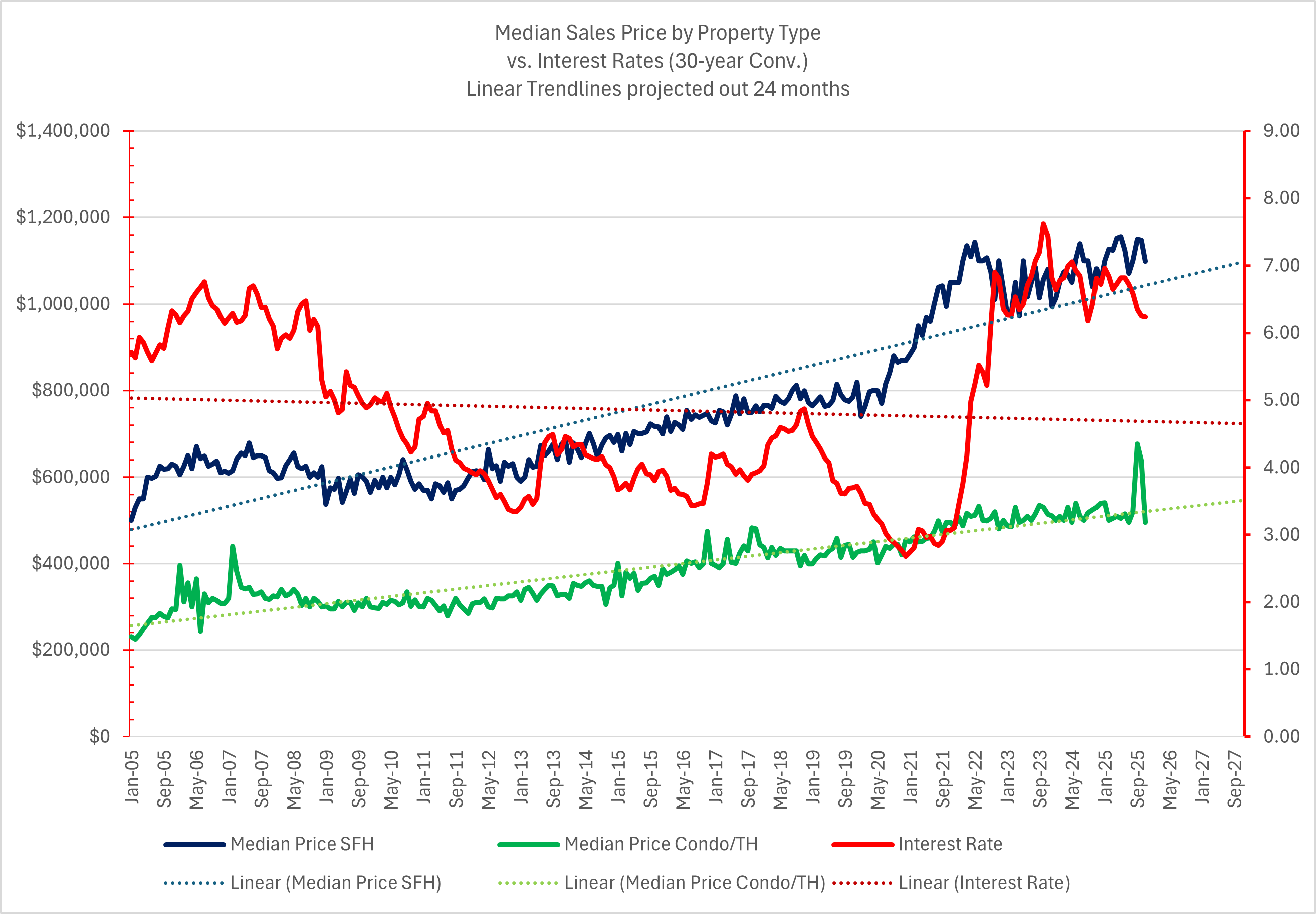
A Quarter-Century of Real Estate in Honolulu County: Trends in Median Sales Prices

median sales vs interest rate

Chart Data updated as of December 10, 2025. Median Home Sales data from HiCentral MLS. Data deemed reliable but not guaranteed. InfoSparks (c) 2024 ShowingTime. Freddie Mac, 30-Year Fixed Rate Mortgage Average in the United States [MORTGAGE30US], retrieved from FRED, Federal Reserve Bank of St. Louis; https://fred.stlouisfed.org/series/MORTGAGE30US, December 10, 2025.

Originally posted September 7, 2023, the chart has been updated December 10, 2025: Oahu, Hawaii has always been a coveted destination for homebuyers seeking a slice of paradise. Over the past 25 years, the real estate market in Hawaii has seen its fair share of ups and downs. We will delve into the trends in median sales prices, exploring the factors that have shaped the residential real estate market on this tropical island.

The Early 2000s Boom:

The early 2000s brought a significant surge in real estate prices in Honolulu County, driven by factors such as a robust economy, low-interest rates, and increased demand for properties. During this period, the median sales price witnessed substantial growth, making homeownership seem like an attractive investment opportunity.

The Housing Bubble Burst:

Around 2007-2008, the housing bubble burst, affecting markets across the United States, including Honolulu County. The median sales price took a hit, and many homeowners found themselves underwater on their mortgages. It was a challenging time for both buyers and sellers, as the market struggled to regain stability.

Post-Recession Recovery:

Following the recession, Honolulu County's real estate market slowly but steadily recovered. Government initiatives, coupled with lower interest rates, encouraged buyers back into the market. The median sales price began to show signs of growth, albeit at a more sustainable pace.

The Impact of Tourism:

Tourism plays a significant role in Honolulu County's economy, and this has a direct impact on the real estate market. A surge in tourists can lead to increased demand for vacation rentals and investment properties, affecting the median sales price. Conversely, events like the COVID-19 pandemic brought a temporary decline in tourism and its associated effects on the market.

Recent Trends:

In recent years, we've witnessed a resurgence in the demand for homes in Honolulu. Low mortgage rates, a desire for more spacious living due to remote work, and the allure of Oahu's natural beauty have driven interest in the local real estate market. As a result, the median sales price has continued to rise, albeit with fluctuations influenced by various factors.

Over the past 25 years, the real estate market in Honolulu County has experienced its fair share of highs and lows. From the early 2000s boom to the challenges of the housing bubble burst and subsequent recovery, the median sales price has been on a rollercoaster ride. Today, the market is shaped by a combination of factors, including tourism, interest rates, and changing buyer preferences. For those considering investing in Hawaii real estate, understanding these historical trends can provide valuable insights into the market's resilience and potential for future growth.

As a real estate broker in Hawaii staying informed about these trends, I can help you better understand and navigate the ever-changing landscape of Oahu's real estate market.


Aug. 24, 2023

Navigating the Unseen: A Guide to Buying a House Remotely

In an era where technology and real estate expertise converge, the idea of purchasing a house sight unseen is no longer as daunting as it once seemed. Whether you're considering an out-of-state move or simply find yourself in a unique situation, teaming up with a reliable real estate agent and leveraging virtual tools can transform this experience into a confident and successful endeavor. Let's delve into the world of buying a house sight unseen and how you can turn it to your advantage.

Forge a Partnership with a Dependable Real Estate Agent:

The initial step towards a seamless sight-unseen purchase involves enlisting the assistance of a trustworthy real estate agent. Opt for an agent who not only comprehends your housing requirements but also possesses an in-depth familiarity with the area. An agent's adeptness with technology and stellar communication skills are vital aspects that ensure you're in capable hands.

Virtual Tours: Exploring Homes from Afar:

While physically visiting properties might not be feasible, modern technology bridges the gap. Your chosen agent should maintain a comprehensive checklist of your preferences. This enables them to conduct virtual property tours, utilizing tools like Facetime or video calls. During these tours, request your agent to provide a walkthrough of the home, including opening doors, cabinets, and drawers. Gauge the dimensions of different features with the help of a tape measure. Seek information about any peculiar odors or noises, and ensure a thorough exterior tour. For an added layer of assurance, consider involving local friends or family members to accompany your agent, offering invaluable insights.

Exploring the Neighborhood:

A house is only as good as its surroundings. Gaining a holistic understanding of the neighborhood is essential. Beside the property, request your real estate agent to explore the community, including the downtown area. This enables you to gauge the local vibe, dining options, retail stores, parks, and other notable features that contribute to your future living experience.

Scrutinize Home Inspectors Thoroughly:

When making a sight-unseen purchase, a comprehensive home inspection becomes non-negotiable. Prioritize due diligence by interviewing multiple home inspectors and checking their references. Your real estate agent can accompany the inspector during the assessment, and through video calls, address any concerns in real-time. Detailed inspection reports provide insights into potential issues, while proactive communication with the inspector yields professional recommendations.

Attempt a Pre-Closing Property Visit:

While competitive markets might necessitate an offer before an in-person viewing, the closing period typically spans around 30-45 days. This timeframe allows you to arrange a visit to the property before the final closure. Although a rare circumstance might lead to the forfeiture of earnest money, it's a valuable opportunity to identify any major concerns. Once the keys are officially handed over, the property becomes your responsibility.

Conclusion:

In a real estate landscape characterized by innovation and adaptability, purchasing a house sight unseen is no longer an insurmountable challenge. By fostering transparent communication, building a reliable support team, and harnessing technology, you can confidently navigate this unique buying experience. Embrace the possibilities that the modern real estate world offers, and embark on your journey towards owning your dream home—even from a distance.

Call one of our agents today to discuss the possibilities of purchasing your Hawaii dream home.

Aug. 7, 2023

Hawaii's Environmental Pledge: Transitioning from Cesspools to Septic Tanks by 2050

Nestled in the Pacific Ocean, Hawaii's natural beauty has long captivated the world. To preserve this paradise for future generations, Hawaii enacted a groundbreaking law in 2017, mandating the conversion of all cesspools to septic tanks by 2050. This bold step towards sustainable waste management aims to protect the islands' delicate ecosystems and safeguard public health. In this blog post, we explore the significance of this law and provide links to government websites that offer comprehensive details on the conversion process.

Understanding the Importance of Cesspool Conversion

Cesspools, once a common waste disposal method in Hawaii, have proven detrimental to both the environment and public health. These shallow, untreated pits allow pollutants to seep into groundwater and coastal waters, threatening marine life and coral reefs. Furthermore, they pose a risk of contaminating drinking water sources, compromising the well-being of residents and visitors alike. Recognizing the urgent need for change, Hawaii embraced a visionary approach to address this issue.

The Comprehensive Plan for Cesspool Conversion

Hawaii's Act 125 lays out a comprehensive plan to eliminate cesspools from the islands' landscape. The law requires all property owners to convert their cesspools to septic systems or other approved wastewater treatment alternatives by 2050. This plan applies to both residential and commercial properties across the state.

Web Links to Government Websites

Hawaii State Department of Health (DOH): The DOH plays a central role in implementing the cesspool conversion law. Their website provides a wealth of information on the initiative, including guidelines for property owners, details on approved septic systems, and financial assistance programs. Visit the DOH website at: https://health.hawaii.gov/wastewater/home/cesspools/

Cesspool Conversion Working Group: The Cesspool Conversion Working Group is an essential collaboration between various government agencies, non-profit organizations, and private entities. Their website serves as a valuable resource, offering updates on the latest developments, educational materials, and community engagement initiatives. Explore their website at: https://cesspoolconversion.com/

Hawaii State Department of Land and Natural Resources (DLNR): The DLNR is responsible for overseeing the environmental impact of the cesspool conversion process. Their website provides detailed information on permits, regulatory requirements, and guidelines to ensure that conversions adhere to environmental standards. Visit the DLNR website at: 

Financial Assistance and Incentives

Converting cesspools to septic systems can be a substantial financial undertaking for property owners. To ease this burden, Hawaii offers several financial assistance programs and tax incentives. Government websites such as the Department of Health and the Cesspool Conversion Working Group provide information on these programs, guiding property owners through the application process and eligibility criteria.

Educational Initiatives and Community Engagement

A successful transition from cesspools to septic systems relies on community engagement and public awareness. The government websites listed above offer educational resources, brochures, and informative articles, empowering residents to make informed decisions about the conversion process. These platforms also promote community engagement events and workshops, fostering a sense of collective responsibility towards the islands' sustainability.

Hawaii's law requiring the conversion of all cesspools to septic tanks by 2050 represents a remarkable commitment to environmental preservation and public health. Through a comprehensive plan, financial incentives, and community engagement initiatives, the state is leading the charge towards a cleaner, greener future. By accessing the government websites provided, property owners and residents can gather detailed information about the process, ensuring a successful and seamless transition from cesspools to more sustainable wastewater treatment systems.

Let us unite in Hawaii's vision and work together to protect this paradise for generations to come. Together, we can make a significant difference and ensure that Hawaii's natural beauty endures for centuries.

Aug. 4, 2023

Embracing the Aloha Spirit: Being a Good Neighbor in Hawaii

Hawaii, known for its breathtaking natural beauty and vibrant culture, is not just a vacation destination but a close-knit community. As a resident or even a temporary visitor, embracing the Aloha Spirit and being a good neighbor is essential to fostering a harmonious and welcoming environment. In this blog post, we will explore some key principles and actions that contribute to being a good neighbor in the beautiful islands of Hawaii.

Embrace the Aloha Spirit:

At the heart of being a good neighbor in Hawaii is embracing the Aloha Spirit, a fundamental aspect of Hawaiian culture. Aloha goes beyond a simple greeting—it embodies love, peace, compassion, and respect for others. Make an effort to greet your neighbors with a warm smile, engage in conversation, and demonstrate genuine care and kindness.

Respect the Land and Environment:

Hawaii's natural wonders are what make the islands truly remarkable. As a responsible neighbor, it's important to respect and care for the land and environment. Follow local regulations, such as proper waste disposal and recycling practices. Take care to minimize your impact on the delicate ecosystems by leaving no trace when hiking, snorkeling, or visiting beaches. By practicing sustainable habits, you contribute to the long-term preservation of Hawaii's natural beauty.

Be Mindful of Noise Levels:

Hawaii's residential neighborhoods are often peaceful and tranquil, and maintaining this atmosphere is crucial for the well-being of the community. Be mindful of noise levels, especially during evening and nighttime hours. Avoid excessive noise, loud parties, or playing music at high volumes. Respecting the peace and quiet will not only be appreciated by your neighbors but will also allow everyone to enjoy their homes and surroundings.

Practice Cultural Sensitivity:

Hawaii is a cultural melting pot, and each island has its own unique traditions and customs. It's important to learn and appreciate the local culture while being sensitive to the traditions of others. Respect cultural practices, such as kapu (forbidden) areas or events, and be open to learning about Hawaiian history and customs. By doing so, you not only deepen your connection to the community but also foster an environment of inclusivity and mutual respect.

Support Local Businesses and Community Initiatives:

Being a good neighbor means actively participating in the community and supporting local businesses and initiatives. Hawaii's economy relies heavily on tourism, but it's crucial to strike a balance by supporting local entrepreneurs, artisans, and farmers. Explore farmers' markets, dine at local restaurants, purchase handmade crafts, and participate in community events. By doing so, you contribute to the local economy and help create a stronger and more resilient community.

Offer Assistance and Support:

In times of need, the strength of a community shines through. Be there for your neighbors, especially during challenging circumstances like natural disasters or personal emergencies. Offer a helping hand, share resources, or volunteer your time to assist those in need. Building a sense of community and solidarity is at the core of being a good neighbor in Hawaii.

Conclusion:

Being a good neighbor in Hawaii is not simply about residing in proximity to others; it's about embracing the Aloha Spirit and actively contributing to the well-being of the community. By respecting the land, practicing cultural sensitivity, supporting local businesses, and offering assistance when needed, you become an integral part of the vibrant tapestry that makes Hawaii a special place. Let us all strive to live by the principles of Aloha and be the best neighbors we can be, fostering a community where everyone feels welcome, respected, and valued.

July 12, 2023

What Is A Leasehold Property?

Leasehold Properties

A leasehold property is a property wherein you own the structure (condominium, townhouse, or Single-Family home) but not the land on which the improved structure sits.

How Leasehold Works

When you purchase a leasehold property, you are buying the improved structure on top of the land it sits on. You (the lessee) pay the landowner (the lessor) rent for the land your property is on for a fixed term.  When the term expires, the land reverts to the lessor, and all ownership rights are canceled (your property reverts to the landowner). Most leases have renegotiation dates at which the land lease amount is renegotiated for another term. The lease amount will increase, and the increase is often a multiple of the previous amount.   

In some cases, a buyer of a leasehold property may have the opportunity to buy the land as part of the purchase of the improvements, if the fee is available. “Fee” in this instance means owning the land. Some landowners offer fee ownership on an ongoing basis. It never hurts to ask if the fee is available to purchase when looking at a leasehold property.

If the fee is unavailable, it's imperative you find out everything you can about the lease terms and the landowner’s plans. Here is where the professional help of a Corcoran agent is worth its weight in gold.

Your Coldwell Banker Island Properties agent can advise you on the lease term, when it will be renegotiated, whether it has recently been renegotiated, and explore other options regarding the property. It’s also possible that a fee offering is planned, or perhaps the landowner can be persuaded to sell the fee to you. Should the fee not be available, there are financing considerations that leasehold buyers should understand:

You may not be able to get a 30-year loan on a leasehold property - Most lenders will only make a loan for a portion of the remaining term of the lease. For example, if the lease term has 30 years remaining, the lender may offer a 15-year loan.   

On leases with less than 30 years remaining, the IRS does not consider the property as real estate. You won’t be able to [1031] exchange the property or defer any capital gains taxes.

If you already own a leasehold property, pay attention to any fee offerings. It's generally recommended to purchase the fee as soon as it is offered. Don’t wait. There are no guarantees you’ll get another chance, and the cost of the fee often increases over time. In general, land appreciates over time and improved structures depreciate over time.

Leasehold has its Risks

Purchasing leasehold properties has its risks. Make sure you understand the lease terms clearly before moving ahead. Even leases with long terms often have renegotiation dates, which can interfere with financing. For example, if there is a renegotiation date within 5 years of purchase, the lender may use an estimated renegotiated lease rate to qualify the buyer. Lease rents are added to the loan payment when determining if the buyer qualifies for a loan. The higher estimated renegotiated rate may be too high for the buyer to qualify for the loan, even though they can qualify at the current lease rent amount.   

Leasehold can also be difficult to resell. Unlike Fee Simple properties, leasehold properties often lose value over time. Why? Simple. The longer you hold on to a leasehold property, the shorter the term of the lease gets. A shorter lease term can make reselling the property difficult.

Leasehold is not for Everybody

Most people are much better off with a Fee Simple property - owning the land outright.  However, in some situations, a Leasehold property may work.

  • Investors - With a low initial cost of the property, investors can get a healthy ROI over the term of the lease. Leasehold properties rent for the same amount as similar fee simple properties.
  • Lifestyle Buyers - Buyers that aren't in it for the long haul or to build wealth.  These buyers usually have multiple properties in their portfolio and can get a Leasehold property in an ideal location for a fraction of the price.
  • Seniors – For retirees who don’t have heirs to leave the property to, or who want to take their equity out of a fee simple property, Leasehold can be a way to downsize for retirees and keep most of their assets liquid.
  • College Students – Leasehold properties can give college students a quality place to live throughout school, then generate rental income (or cash flow) after they graduate and move out. The tradeoff will be the lack of property appreciation over time.

The knowledge and experience of THE SALAZAR GROUP at Coldwell Banker Island Properties can help you decide whether a leasehold is for you. Talk to your agent today.

July 7, 2023

Building Your Credit Score: A Compassionate Guide to Financial Health

Building a strong credit score can feel overwhelming, especially if you’re just starting out or trying to recover from past financial decisions. But don’t worry—understanding and improving your credit score is entirely possible, and I’m here to guide you through it with compassion and clarity. Let’s break it down into manageable steps so you can feel empowered on your financial journey.

What is a Credit Score?

First off, let’s demystify what a credit score is. Think of your credit score as a report card for how you handle money. Lenders use a three-digit number to determine how likely you are to pay back borrowed money. The higher your score, the better it reflects your financial responsibility.

Why Does Your Credit Score Matter?

Your credit score plays a significant role in many aspects of your financial life. It can affect your ability to secure loans, rent an apartment, or even land a job in some cases. A good credit score can help you get lower interest rates, which means you’ll pay less over time for things like car loans and mortgages. In short, a strong credit score is essential to your financial well-being.

Steps to Build Your Credit Score

  1. Check Your Credit Report: The first step in building your credit score is knowing where you stand. Get a free copy of your credit report from the major credit bureaus: Experian, Equifax, and TransUnion. Review it for any errors, as mistakes can sometimes drag your score down. If you spot any inaccuracies, dispute them right away.
  2. Pay Your Bills on Time: Life can get busy, but making your payments on time is one of the most important factors in building a good credit score. Set up reminders on your phone or automate payments if you can. This simple step can help you avoid late fees and keep your score on the rise.
  3. Keep Credit Utilization Low: Credit utilization refers to how much of your available credit you’re using. Ideally, you want to keep this percentage below 30%. If you have a credit limit of $1,000, try not to carry a balance higher than $300. If you find yourself nearing this limit, consider paying down your balance or requesting a credit limit increase.
  4. Open a Credit Card: If you don’t have any credit accounts yet, getting a secured credit card can be a great way to start. These cards require a cash deposit as collateral, which lowers the risk for the lender. Use it for small purchases and pay off the balance every month. This will help you build a positive credit history.
  5. Don’t Close Old Accounts: The length of your credit history matters too. Keeping old credit accounts open—even if you don’t use them—can positively impact your score. It shows lenders that you have experience managing credit over time.
  6. Limit Hard Inquiries: Every time you apply for new credit, a hard inquiry is made on your report. Too many hard inquiries in a short time can lower your score. Try to space out credit applications, and only apply when necessary.
  7. Be Patient and Persistent: Building your credit score is a marathon, not a sprint. It takes time to see significant changes, but every positive action you take will contribute to your overall financial health. Celebrate small victories along the way to stay motivated!

Final Thoughts

Everyone’s financial journey is unique, and building your credit score is just one part of your overall financial picture. It’s perfectly okay to seek help if you’re feeling lost or overwhelmed—talking to a trusted friend, seeking advice from a financial professional, or diving into educational resources.

With dedication and patience, you can improve your credit score and take charge of your financial future. You’ve got this!