🌴KEYS TO THE ISLANDS🌴

Unlocking Your New 🏡Home in Hawaii, the blog

Thank you for stopping by. Here, you'll find Insights and Tips for Real Estate in Hawaii. Please visit often for updates. The comments on this blog are mine and mine alone. All information provided is deemed reliable but is not guaranteed and should be independently verified.

July 10, 2026

Paradise Proven Resilient: Navigating the 2026 Hawaii Real Estate Market

Updated November 2026 with September 2026 figures.

Imagine standing on the shores of Oahu, watching the tide pull back only to return with a powerful, unmistakable surge. For anyone keeping a close eye on Hawaii’s real estate market over the last few decades, that rhythmic movement feels incredibly familiar.

Behind the postcard-perfect backdrop of swaying palms and dramatic ridgelines lies one of the most resilient, dynamic housing markets in the entire nation. While the U.S. economy continues to wrestle with shifting nationwide trends—including volatile interest rates and evolving buyer habits—Hawaii's property market is once again proving its legendary staying power.

Let’s look at the latest numbers, how they connect to Hawaii’s long-term history, and what this current environment means for you.

The Fall 2026 Snapshot: Holding Steady at a Higher Level

Prices peaked in early summer and have eased slightly since, while sales have picked up. Here is where Oahu stood in September 2026, compared with September 2025:

  • Single-family homes: The median sales price was $1,110,000, down 3.9% from a year earlier, after reaching $1,230,000 in June. Sales rose 6.2% to 293 homes, and homes sold in a median of just 16 days.

  • Condos and townhouses: The median rose 2.8% to $523,000. Sales slipped 8.1% to 375, and condo inventory grew 7.8% to 2,509 units, giving buyers more choice.

  • Mortgage rates: Freddie Mac's 30-year average climbed to a 2026 peak of 7.40% in October and eased to 7.18% by November 5, up from about 6.2% a year earlier.

Even with rates above 7%, nearly a third of single-family homes (31%) sold above their original asking price. Demand for well-priced homes on Oahu remains strong, even as prices level off.

Sources: Honolulu Board of REALTORS®, September 2026, compiled from HiCentral MLS; Freddie Mac Primary Mortgage Market Survey, November 5, 2026.

The 25-Year Context: A History of Resisting the Drop

To truly understand why Hawaii behaves so differently from the rest of the country, it helps to look backward. As highlighted by The Salazar Group, Hawaii’s real estate market has weathered a 25-year rollercoaster with unmatched grace.
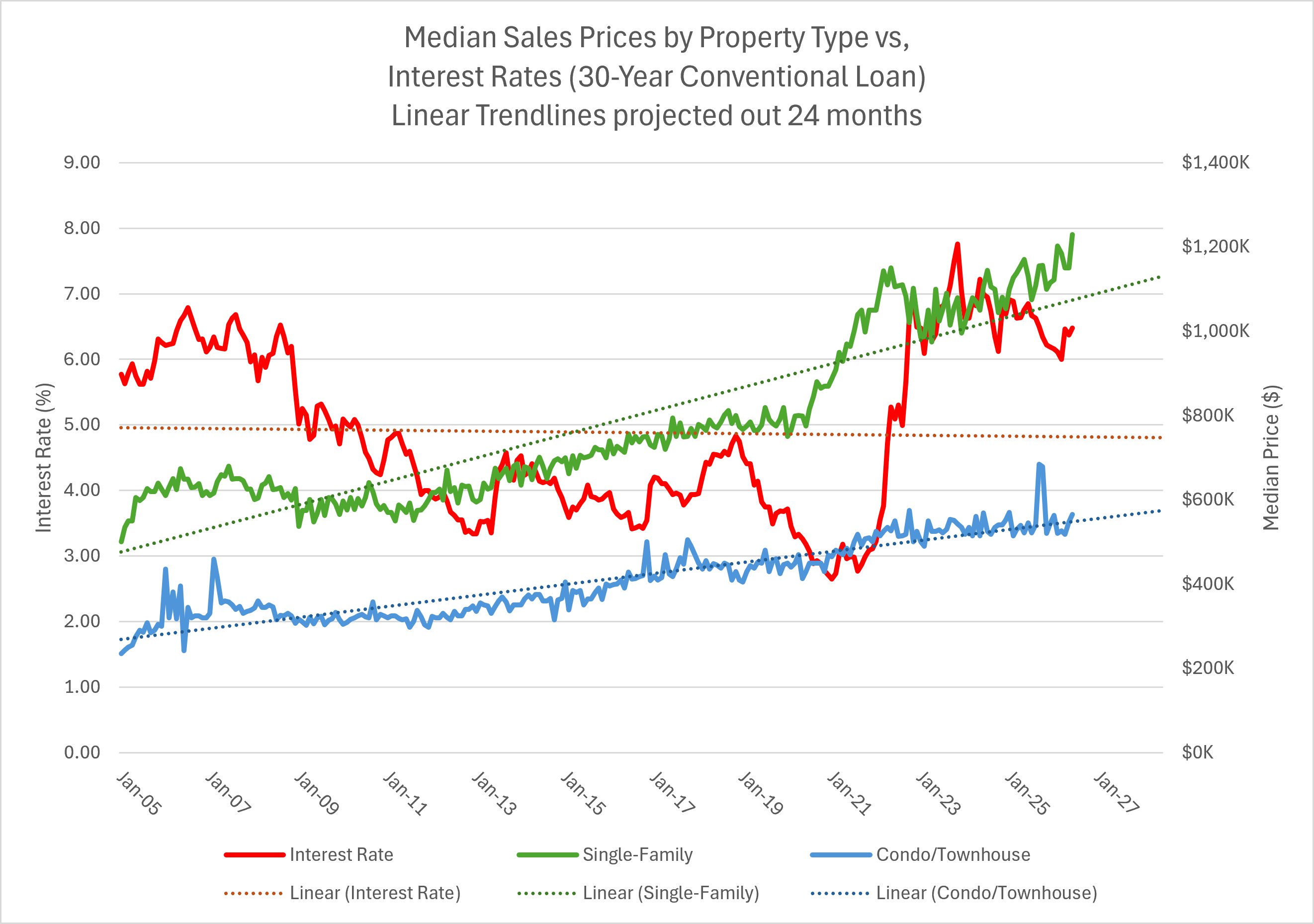
Median home prices vs interest rates last 25 years

During the devastating 2007–2008 global financial crisis, home prices across the mainland U.S. cratered by 30% to 50%. Entire subdivisions sat abandoned. In contrast, Honolulu County's median home prices dipped by a modest 11%. Because local lending practices remained conservative and subprime loans were scarce, the market avoided a foreclosure crisis, stabilized by 2010, and completely recovered within just five to six years.

When the pandemic hit in 2020, a sudden freeze in tourism threatened the economic lifeblood of the islands. Yet, as remote work took hold, demand for Oahu's natural beauty and lifestyle skyrocketed, rapidly pushing median home prices past the million-dollar threshold by 2025.

Why Does Hawaii Always Bounce Back?

Hawaii’s market relies on core fundamentals that shield it from broader national economic downturns:

  1. Strict Geographic Scarcity: Unlike the sprawling suburbs of Texas or Florida, you cannot build more land on an island. Supply is inherently locked, while global demand remains constant.

  2. The Tourism and Economic Engine: Strong visitor arrivals and hotel occupancy rates directly translate to local economic confidence. When the tourism engine hums, demand for properties, investment rentals, and luxury vacation homes accelerates right alongside it.

  3. Shifting Buyer Intentions: Modern buyers aren't just looking for brick-and-mortar investments; they are prioritizing lifestyle, wellness, and remote-work flexibility—qualities Hawaii offers in abundance.

What This Means for Buyers and Sellers Today

If you are a Buyer, the current market rewards preparation. Waiting for a big drop in Oahu prices has rarely paid off; the market's dips tend to be shallow. Today you have more condo choices than a year ago, and 39% of single-family homes sold for under $1 million in September. With rates near 7.2%, get pre-approved first so you know your real monthly payment before you shop.

If you are a Seller, you still hold a valuable asset. The single-family median is $1,110,000, and well-priced homes are selling in about two weeks, often with multiple offers. Pricing matters more than it did in the spring, though: buyers are watching their payments closely, and homes priced above the market tend to sit.

The Bottom Line

Hawaii real estate isn't just about buying a home; it's about securing a piece of an incredibly resilient economic ecosystem. Through bubbles, pandemics, and rate hikes, the islands have proven time and time again that they can weather the storm.

Curious what your Oahu home is worth today, or ready to start your island search? Contact us for a local, data-backed look at your neighborhood.

Dec. 10, 2025

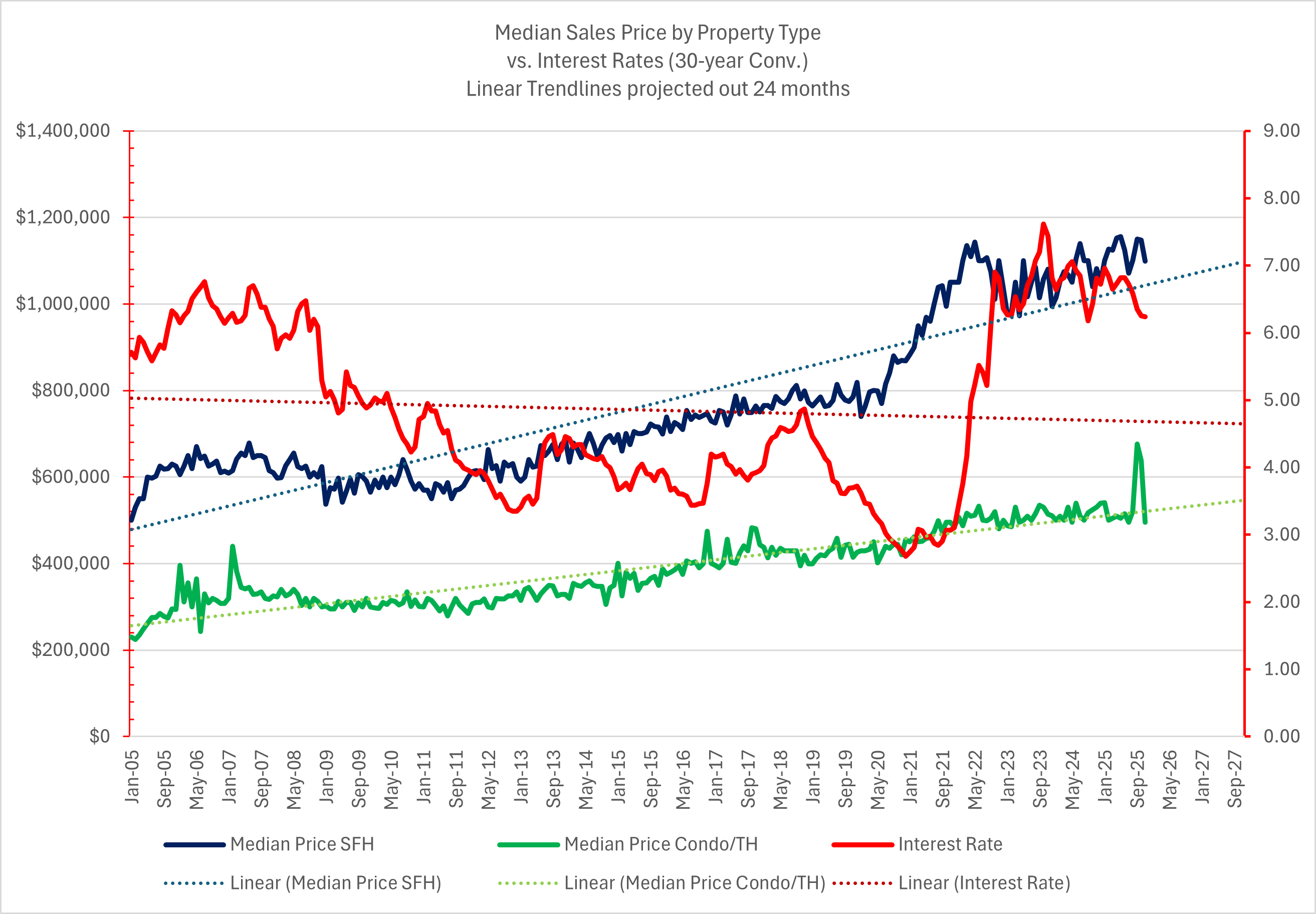
Oahu Real Estate: 25 Years of Ups, Downs, and Resilience (2000–2025)

Oahu Real Estate: 25 Years of Ups, Downs, and Resilience (2000–2025)

Oahu’s Real Estate Rollercoaster

Oahu, Hawaii, has long been a dream destination for homebuyers seeking paradise. But behind the postcard-perfect beaches and lush mountains lies a real estate market that’s seen dramatic highs and lows over the past 25 years. In this post, we’ll explore the trends in median sales prices, the economic and social forces at play, and what these patterns mean for buyers, sellers, and investors today.

The Early 2000s Boom: A Perfect Storm for Growth

The dawn of the new millennium brought a surge in Oahu’s real estate market. Several factors converged to fuel this boom:

  • Robust Economic Growth: Hawaii’s real GDP outpaced the national average from 2002–2005, with real estate and construction leading the way.
  • Low Interest Rates: Historically low mortgage rates made homeownership more accessible, enticing both locals and mainland buyers.
  • Population Growth: Oahu’s population steadily increased, intensifying competition for limited housing.
  • Tourism Recovery: After a brief post-9/11 dip, tourism rebounded, supporting jobs and boosting demand for homes and vacation rentals.

Result:

Median sales prices for single-family homes and condos climbed rapidly, making real estate a hot investment.

The Housing Bubble Burst: Weathering the Storm

Like the rest of the U.S., Oahu felt the impact of the 2007–2008 housing crisis, but with some key differences:

  • Moderate Price Decline: Median home prices in Honolulu County fell by about 11%—far less than the 30–50% drops seen in many mainland markets.
  • Fewer Foreclosures: Conservative lending practices and fewer subprime loans helped cushion the blow.
  • Faster Recovery: Oahu’s market stabilized by 2010 and returned to pre-crisis price levels within 5–6 years.

Why the Resilience?

Limited land, strong local demand, and a steady tourism industry helped Oahu bounce back faster than most U.S. cities.

Post-Recession Recovery: Steady and Sustainable

After the recession, Oahu’s real estate market began a slow but steady recovery:

  • Government Support: Initiatives and stimulus programs encouraged buyers to re-enter the market.
  • Low Interest Rates: Continued low rates kept mortgages affordable.
  • Tourism’s Return: As visitor numbers climbed, so did demand for vacation rentals and investment properties.

Trend:

Median sales prices grew at a more sustainable pace, setting the stage for future gains.

The Impact of Tourism: A Double-Edged Sword

  • Tourism is the lifeblood of Oahu’s economy—and its real estate market:
  • Boom Times: High visitor arrivals and hotel occupancy rates often coincide with rising home prices, especially in neighborhoods popular with investors.
  • Pandemic Pause: The COVID-19 pandemic caused a sharp drop in tourism and a brief stagnation in home prices, particularly in areas reliant on vacation rentals.
  • Rapid Rebound: As tourism recovered and remote work became more common, demand for Oahu homes surged again.

Recent Trends (2023–2025): New Highs and Shifting Preferences

The last few years have seen Oahu’s real estate market reach new heights:

  • Record Prices: By 2025, the median sales price for single-family homes consistently exceeded $1.1 million, with condos around $500,000–$510,000.
  • Price per Square Foot: In October 2025, the median price per square foot ranged from $709 to $730.
  • Sales Volume: Q1 2025 saw 569 single-family homes and 974 condos sold, with a slight dip in single-family sales but stable condo activity.
  • Changing Buyer Preferences: Remote work, lifestyle changes, and the enduring appeal of Oahu’s natural beauty have kept demand strong, even as mortgage rates fluctuate.

Quick Reference: Oahu Real Estate Market (2000–2025)

Conclusion: Lessons from 25 Years of Change

Oahu’s real estate market has proven remarkably resilient, weathering national crises and global disruptions to reach new heights. The interplay of economic growth, interest rates, tourism, and local market dynamics has shaped a market that continues to attract buyers and investors from around the world.

Thinking of buying or selling on Oahu?

Understanding these historical trends can help you make informed decisions in an ever-changing landscape. As a local real estate broker, I’m here to help you navigate Oahu’s unique market with confidence.

Ready to explore your options? Contact me today for personalized insights and guidance on Oahu real estate!

Dec. 10, 2025

Your Oahu Market Report for November 2025

Get an in-depth look at the Oahu residential real estate market. Click on the image to download the full pdf report.

November 2025 Market Report

Sept. 17, 2025

Oahu Short-Term Rental Rules in 2026: What Buyers and Owners Need to Know

Updated October 2026. This is general information, not legal advice. Rules change; confirm any specific property with the Department of Planning and Permitting (DPP) or a Hawaii real estate attorney.

The short answer: on Oahu, rentals of less than 90 consecutive days are legal only in a few places. Those are resort-zoned areas (Waikiki, Ko Olina, Makaha, Hoakalei and Turtle Bay), certain mapped apartment lots next to them, and units with a grandfathered Nonconforming Use Certificate (NUC). Everywhere else, the minimum rental period is 90 days, and every legal short-term rental must be registered with the city and renewed each year.

View More
Feb. 14, 2025

Understanding Hawaii’s Housing Market

Understanding Hawaii’s Housing Market: Challenges and Opportunities

The allure of Hawaii, with its breathtaking landscapes, vibrant culture, and idyllic weather, is undeniable. However, beneath its paradisiacal facade lies a real estate market fraught with challenges. Understanding Hawaii's housing market requires delving into the decades-long development of its present-day conditions. As real estate agents dedicated to helping clients navigate this complex environment, we must know the historical context and current dynamics shaping Hawaii's housing landscape.

A Historical Perspective: The Roots of the Housing Crisis

Hawaii's housing issues did not emerge overnight. Instead, they are the cumulative result of decades of decisions and circumstances. From post-war population booms to waves of economic changes, factors contributing to the current housing crisis have been compounding for years. Policies designed to protect the islands' precious environmental resources have often clashed with the burgeoning demand for housing, leading to a critical shortage in available properties.

Throughout the latter half of the 20th century, the influx of newcomers, tourists, and investors has constantly applied pressure on the housing market. The imbalance between supply and demand has become one of the most pressing issues in the islands. As a result, home prices have steadily increased, often outpacing the average income growth of local residents. Understanding these historical elements is crucial for any real estate professional aiding clients in Hawaii.

Market Dynamics: The Contemporary Landscape

Today's housing market in Hawaii presents several unique challenges. The high cost of land and construction have contributed to escalating property prices, making affordable housing a scarce resource. Additionally, geographic constraints limit expansion, while the tourism industry competes with residential needs for space and resources. All these factors collectively create a competitive and fast-paced real estate market.

The demand for housing continues to outweigh the supply, further driving up the cost of homes in urban and rural areas. The limited housing availability has a ripple effect across different socioeconomic groups, forcing many families to work multiple jobs to afford rental prices or consider moving away from the islands entirely.

Urbanization vs. Preservation: The Balancing Act

One of the most significant aspects of Hawaii's housing conundrum is the balance between urbanization and preservation. Hawaii is renowned for its natural beauty, and maintaining this allure is vital for environmental and economic reasons. However, the demand for more housing often leads to conflicts over land use and development rights.

Innovative growth strategies, for example, aim to address this issue by promoting higher-density development in urban areas while preserving rural and natural spaces. As real estate agents, emphasizing the importance of sustainable development and responsible land use can help clients make informed decisions that align with their values and lifestyle needs.

Opportunities for Buyers and Sellers

Despite these challenges, Hawaii's housing market presents numerous opportunities for buyers and sellers. For buyers, mainly those willing to engage in strategic planning and patient searching, gems are found at every market level. Working with a knowledgeable real estate agent who understands local nuances can significantly improve one's ability to navigate available opportunities.

In contrast, sellers in Hawaii benefit from the high demand for residential properties. Properly marketing a property and highlighting unique features can lead to competitive offers and favorable selling conditions. As the market evolves, staying well-informed and adaptable will be key for anyone looking to succeed in Hawaii's real estate sector.

Preparing for the Future

Hawaii's housing market is as beautiful as it is complex. For real estate professionals and potential homeowners alike, understanding the intricacies of this market is crucial for making informed decisions that ensure long-term success and satisfaction. By learning from the past and embracing new solutions for future growth, we can better serve our clients and help them achieve their dreams of living in Hawaii's paradise.

Ultimately, a thorough grasp of Hawaii's real estate history and an awareness of current market dynamics positions us to offer the best possible guidance and support to those seeking to buy or sell property in one of the world's most desirable locales.

Sept. 4, 2024

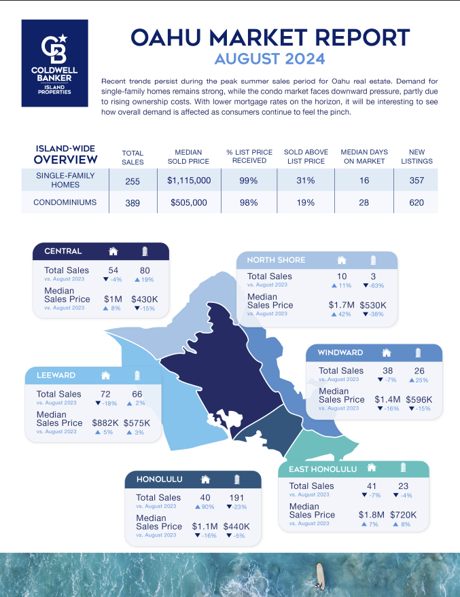
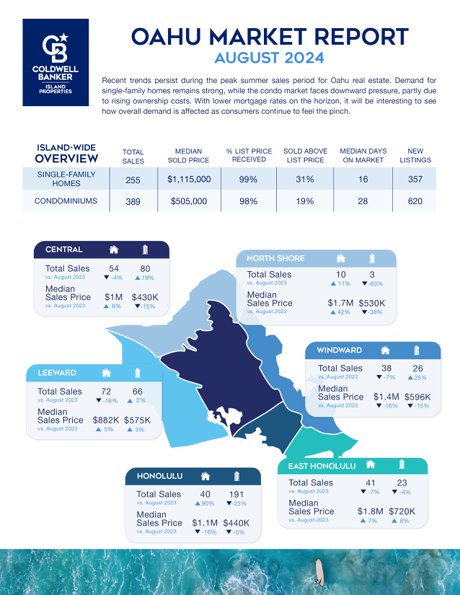
Your Oahu Market Report for August 2024

Get an in-depth look at the Oahu residential real estate market. Click on the image to download the full pdf report.

August 2024 Oahu Market Update

Aug. 29, 2024

Oahu Neighborhoods Guide: The 12 MLS Regions and What Homes Cost

Updated November 2026. Listing figures come from HiCentral MLS through our website search on November 2, 2026, and change daily.

The short answer: HiCentral MLS, Oahu's listing service, divides the island into 12 regions: Metro, Diamond Head, Hawaii Kai, Kailua, Kaneohe, North Shore, Central Oahu, Pearl City, Waipahu, Ewa Plain, Makakilo and Leeward Coast. On November 2, 2026, Metro had the most condos for sale (2,104), and Ewa Plain had the most single-family homes (202). Asking prices per square foot ran from about $540 for homes on the Leeward Coast to about $1,360 in the Kailua region.

View More
Aug. 5, 2024

The Rising Homeowner's Insurance Rates in Hawaii: Impacts and Legislative Responses

Homeowner's insurance rates in Hawaii have been on a steep rise, significantly affecting the real estate market, particularly for condominiums. This report delves into the reasons behind the increasing insurance rates, the impact on buying and selling homes, and the measures taken by the Hawaii legislature and governor to address this crisis.

Reasons for Rising Insurance Rates

Several factors contribute to the rising homeowner's insurance rates in Hawaii:

Increased Natural Disasters: The frequency and severity of natural disasters, driven by climate change, have led to higher insurance claims. This has forced insurers to raise premiums to cover the increased risk and losses.

Rising Construction Costs: Inflation and supply-chain disruptions, exacerbated by the COVID-19 pandemic, have driven up the costs of construction materials and labor. This increase in rebuilding costs has directly impacted insurance premiums.

High Risk and Limited Market: Hawaii's relatively small insurance market, combined with its high-risk profile due to natural disasters, has led to fewer insurance providers. This lack of competition allows existing insurers to raise rates significantly.

Increased Claim Payouts: Insurers have faced substantial losses in recent years, prompting them to reevaluate risks and increase premiums to recoup these losses.

Impact on Buying and Selling Homes

The rising insurance rates have profound implications for the real estate market in Hawaii, particularly for condominiums:

Increased Monthly Expenses: Higher insurance premiums translate to increased monthly expenses for condo owners, making it more challenging to afford homeownership.

Decreased Attractiveness to Buyers: Condos with high insurance costs become less attractive to potential buyers, leading to longer times on the market and potentially lower selling prices.

Mortgage Challenges: Condominiums that do not maintain 100% insurance coverage can be blacklisted by lenders, making it difficult for buyers to secure mortgages for units in these buildings.

Potential Decline in Home Sales: The overall increase in insurance costs may deter prospective buyers from purchasing homes, further slowing down the real estate market.

Legislative and Governmental Responses

In response to the insurance crisis, the Hawaii legislature and Governor Josh Green have taken several steps:

Legislative Measures: Lawmakers have advanced bills to stabilize soaring insurance costs for condo owners. These measures include expanding the power of Hawaii's 'insurers of last resort' and reviving the Hawaii Hurricane Relief Fund to provide coverage for condos.

Governor's Initiatives: Governor Josh Green has created an advisory team to work on stabilizing the insurance market. He has also advocated for legislation to impose a climate fee on tourists, allow HECO to use customer funds for state-guaranteed bonds, and establish a state insurance fund to ensure coverage availability.

Emergency Meetings and Discussions: Emergency meetings are being held across the state to address the crisis, although there is a perceived lack of urgency from some local government officials.

Climate Advisory Team: The formation of a Climate Advisory Team aims to analyze risks and costs associated with climate change and propose mitigation strategies.

The rising homeowner's insurance rates in Hawaii are a multifaceted issue driven by increased natural disasters, rising construction costs, and a limited insurance market. These rising costs are significantly impacting the real estate market, particularly for condominiums, by increasing monthly expenses, decreasing property attractiveness, and complicating mortgage processes. The Hawaii legislature and Governor Josh Green are actively working on measures to stabilize the market and ensure the availability of affordable insurance coverage. However, the effectiveness of these measures remains to be seen as the state continues to navigate this complex crisis.

June 21, 2024

Understanding the New NAR Rules: Buyer Representation and Compensation Disclosure

The landscape of real estate transactions is constantly evolving

The recent settlement with the National Association of Realtors (NAR) has made significant changes in the regulations governing buyer representation. We want to provide you with the details of these changes, particularly focusing on the requirement for buyer representation and the new compensation disclosure rules.

Buyer Representation Requirement:

One of the key changes resulting from the NAR settlement is the requirement that buyers have representation before an agent can show them a property. This means that buyers must engage the services of a real estate agent to work on their behalf before they can begin viewing potential properties. This requirement aims to ensure that buyers receive professional guidance and representation throughout the home-buying process, thus empowering them to make well-informed decisions.

Compensation Disclosure:

In addition to the buyer representation requirement, the new rules also mandate buyer's agents to disclose their compensation to buyers. This means that any compensation or incentives received by the buyer's agent in connection with a property transaction must be transparently disclosed to the buyer. This disclosure requirement aims to promote transparency and ensure that buyers clearly understand their agent's financial interests in the transaction.

Negotiability of Compensation:

It's important to note that compensation for real estate agents has always been negotiable. However, the recent changes may lead to scenarios where buyers and their agents must navigate compensation differently. Sellers may no longer offer compensation, meaning buyers may have to pay compensation to their agents or agree to work with their agents to negotiate compensation from the seller's proceeds. This shift underscores the significance of clear communication between buyers and their agents regarding compensation expectations.

Implications for Buyers and Agents:

These changes have significant implications for both buyers and their agents. Buyers must proactively engage a buyer's agent to represent their interests, ensuring they receive the necessary support and guidance throughout the home-buying process. Moreover, buyers and their agents will need to have open discussions about compensation, ensuring that both parties understand the financial aspects of the transaction.

For agents, the new rules emphasize the importance of transparently disclosing compensation to buyers. Agents will need to navigate compensation negotiations that align with their client's best interests while upholding transparency and professionalism.

In conclusion, the recent changes in buyer representation requirements and compensation disclosure represent a significant shift in the real estate landscape. By understanding and adapting to these changes, buyers and their agents can navigate the home-buying process with clarity and confidence, ensuring that their interests are well-represented and that they make informed decisions.

As your trusted real estate partner, we are committed to guiding you through these changes and ensuring you have the support and information you need to navigate the evolving real estate market.

You can read more information on the official NAR website at https://www.nar.realtor/competition-in-real-estate/what-the-nar-settlement-means-for-home-buyers-and-sellers. Even more information can be found at https://competition.realtor/

If you need further details or have any questions about these changes, please feel free to contact us. We are here to provide you with the assistance and guidance you need.

June 18, 2024

Unlocking the Hidden Value of Your Home: Why You Should Choose Us as Your Real Estate Partner

Are you ready to take the next step in your homeownership journey? Selling your home is a significant decision, and we understand the importance of choosing the right real estate partner to guide you through this process. At The Salazar Group | Premier Island Homes Hawaii, our mission is to help you unlock the full potential of your property and achieve the best possible outcome. Here's why you should choose us as your trusted partner in selling your home:

1. Unveiling the Unique Story of Your Home

Every home has a unique story to tell, and we believe that showcasing the distinctive features and characteristics of your property is crucial in capturing the attention of potential buyers. From the charming history of your neighborhood to the intricate architectural details of your home, we take pride in highlighting what makes your property truly one-of-a-kind.

2. Tailored Marketing Strategies

We understand that every home is different, and a one-size-fits-all approach simply won't do. Our team is committed to crafting tailored marketing strategies that accentuate the unique benefits of your home. Whether it's through captivating visual storytelling, targeted digital campaigns, or personalized property tours, we ensure that your home receives the spotlight it deserves.

3. Overcoming Potential Objections with Confidence

Selling a home often comes with its fair share of objections and concerns. Whether it's the need for repairs, market volatility, or timing considerations, we approach each challenge with confidence and expertise. Our team is dedicated to addressing potential objections head-on, providing solutions, and instilling confidence in both you and potential buyers.

4. Maximizing Your Home's Value

We are committed to maximizing the value of your home in the current market. Our in-depth knowledge of local real estate trends, negotiation skills, and strategic pricing approach are all geared towards ensuring that you receive the best possible return on your investment.

5. Transparency and Communication

Effective communication and transparency are at the core of our approach. We keep you informed every step of the way, providing valuable insights, updates on market activity, and feedback from prospective buyers. You can trust that we will always have your best interests at heart.

We understand that selling your home is not just a financial transaction, but a deeply personal journey. That's why we are dedicated to providing you with unparalleled support, guidance, and expertise throughout the entire process.

Ready to unlock the hidden value of your home? Contact us today, and let's embark on this exciting journey together. Your dream sale is within reach, and we are here to make it a reality.