


The True Monthly Cost of an Oahu Condo in 2026
Quick answer: On Oahu, the mortgage is only part of what a condo costs each month. Association (AOAO) maintenance fees, the building's master insurance policy, its reserve fund and the risk of special assessments can add hundreds to well over a thousand dollars a month. Oahu listings in February 2026 showed a median advertised maintenance fee of $882 a month, according to UHERO's Hawaii Housing Factbook 2026. Before you make an offer, look at the building's finances as closely as you look at the unit.
What a Median-Priced Oahu Condo Can Cost Each Month
Here is a simple example using two published 2026 figures: Oahu's September 2026 median condo price and the median advertised maintenance fee on Oahu listings. Your own numbers will differ by building, loan and credit.
| Item | Example |
|---|---|
| Purchase price (Oahu condo median, September 2026) | $523,000 |
| Down payment (20%) | $104,600 |
| Loan amount | $418,400 |
| Principal and interest (30-year fixed at 6.75%) | About $2,714 a month |
| Maintenance fee (Oahu median advertised, February 2026) | $882 a month |
| Subtotal before property tax and your own HO-6 policy | About $3,596 a month |
How we calculated it: $523,000 x 80% = $418,400 loan. A 30-year loan at 6.75% (the Hawaii rate Zillow reported in August 2026) works out to about $2,713.73 a month in principal and interest. $2,713.73 + $882 = $3,595.73. In this example the maintenance fee is about 24.5% of the monthly total ($882 / $3,595.73). Rates change daily, so get a current quote from your lender. Property tax and your individual unit (HO-6) insurance are extra and vary by property.
Why Hawaii Condo Fees Are So High
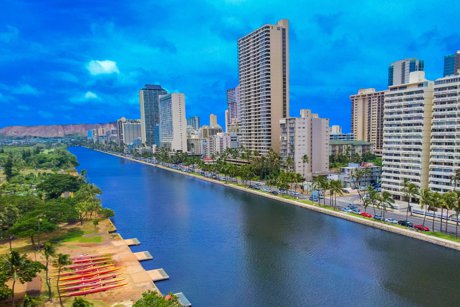
Association fees are a bigger part of homeownership here than almost anywhere else in the country. UHERO reports that 42% of Hawaii homeowners pay monthly HOA or AOAO fees, compared with 25% nationally, and that Hawaii has the second-highest median monthly HOA fee in the nation at $470. Honolulu's Census median is $526, but active listings run higher: the February 2026 median advertised fee on Oahu was $882.
It is not just the luxury towers. Honolulu Board of REALTORS data cited by Hawaii Public Radio shows that more than half of Oahu condos selling for under $500,000 this year had monthly fees of $700 or more.
Your maintenance fee typically pays for the building's master insurance policy, common-area utilities, staff and management, upkeep, and contributions to the reserve fund for big future repairs. When any of those costs jump, the fee follows.
Insurance: The Biggest Wild Card
Rising master policy premiums, especially hurricane coverage, have been the main driver of fee increases in recent years. UHERO's Factbook calls out insurance costs and association fees as growing risks to housing affordability, and notes that rising fees and insurance may offset some of the recent improvement in condo affordability.
When a building faces a sudden, unbudgeted cost like a premium increase, the Hawaii Insurance Division explains that the association will often raise maintenance fees, levy a special assessment on each owner, or both. KHON2 has reported on Oahu associations, including one in Mililani Mauka, where fees nearly doubled from one month to the next because of insurance costs.
The impact shows up in sales. Oahu condo closings were 375 in September 2026, down 8.1% from 408 a year earlier, while single-family sales rose.
Special Assessments and Reserves
A reserve fund is money the association sets aside for major repairs and replacements, such as roofs, elevators, plumbing and concrete. When reserves fall short, the association can charge every owner a lump-sum special assessment. UHERO notes that its fee figures do not include one-time special assessments, which have become common in aging condo buildings. That means the advertised fee may understate what you actually pay.
Hawaii's condominium law (HRS Chapter 514B, including section 514B-148 on budgets and reserves) governs how associations budget and fund reserves. As a buyer, you want to know how well funded the reserves are compared with what the building's reserve study says it needs, and whether any major projects are coming.
Older High-Rises and Fire Sprinklers
After the deadly 2017 Marco Polo fire, Honolulu adopted fire safety requirements for older residential high-rises that were built without sprinklers. Compliance has been slow and the city has revisited deadlines more than once. In late 2024, the Honolulu Fire Department testified that it had identified 288 high-rise buildings that were not protected by automatic sprinklers and had not reached an acceptable score on their life safety evaluations. If you are looking at an older tower, ask the association where it stands on compliance and how any work will be paid for.
Help Is Arriving for Associations
The state has started to respond. In May 2026, the Hawaii Green Infrastructure Authority launched the Condominium Association Loan Program, funded by a $20 million reimbursable general obligation bond. It makes loans to associations for essential, risk-reducing repairs, such as fire sprinklers and other fire safety measures. According to the state, direct loans carry a fixed 7% rate for a 20-year term, associations must first be denied a loan by a financial institution, and they must agree to carry full replacement property and hurricane insurance after the repairs. New loan commitments may be made through June 30, 2027, based on funding.
Separately, under Act 296 (2025), the state reactivated the Hawaii Hurricane Relief Fund to provide hurricane coverage to condo associations that have been denied it in the private market.
These programs help some buildings spread repair costs over time. They do not lower fees on their own, so a building's numbers still need to work for your budget.
How Fees Affect What a Condo Is Worth
Buyers shop by monthly payment, so higher fees mean less room for the price. One Honolulu insurance producer told Hawaii Business that for every $100 increase in monthly fees, a condo loses about $20,000 in value. That is a rule of thumb, not a formula. Here is a simple check: at 6.75% on a 30-year loan, $100 a month supports roughly $15,400 of loan amount ($100 / $6.486 per $1,000 borrowed). So each $100 in fees removes somewhere around $15,000 to $20,000 of buying power, depending on rates and down payment.
Your Condo Due Diligence Checklist
During escrow on an Oahu condo, you will receive the association's documents to review. Read them, and ask about anything that is not clear:
- Current budget and any proposed budget: Are fees set to rise next year?
- Reserve study: When was it last done, and how well funded are reserves compared with what the study recommends?
- Special assessments: Any in the last five years? Any planned or being discussed?
- Board meeting minutes: Look for talk of insurance renewals, leaks, elevators, concrete or plumbing projects.
- Master insurance: What is covered, what is the hurricane deductible, and how have premiums changed over the last few years?
- Fire safety status: For older high-rises, sprinkler and life safety compliance plans.
- Litigation and financing: Pending lawsuits or low reserves can make a building harder to finance. See our guide to condo financing challenges on Oahu.
- Your own HO-6 quote: Get one early, so it is part of your monthly number.
What This Means for You
- Buyers: A condo is still one of the most realistic ways to own on Oahu, especially for first-time buyers. Compare buildings by total monthly cost, not price alone. A well-run building with healthy reserves and a slightly higher fee can be a better buy than a lower-fee building heading for an assessment. If you are buying your first home, see our first-time homebuyer guide to assistance programs.
- Sellers: Buyers are reading the documents closely. Gather your association's budget, reserve study and insurance details before you list, and price with your building's fees in mind. Start with an instant home valuation.
- Owners: Attend board meetings and read the financials so a fee increase or assessment does not catch you by surprise.
Thinking about buying or selling a condo on Oahu? Call The Salazar Group at (808) 204-HOME (4663) or contact us. We will help you compare buildings and read the documents before you commit.
This article is general information, not legal, tax, insurance or financial advice. Program terms, rates and laws change; confirm current details with the agency, your lender and your insurance agent.
Sources
- University of Hawaii at Manoa: Hawaii Housing Factbook 2026 (UHERO), May 7, 2026
- Hawaii Public Radio: Hawaii condo owners pay some of the highest fees in the country, June 12, 2026
- Honolulu Star-Advertiser: Oahu single-family home price weakened in September (Honolulu Board of REALTORS data), October 7, 2026
- Zillow: Hawaii mortgage rates (6.75% 30-year fixed as of August 4, 2026)
- Hawaii Insurance Division (DCCA): Condo Insurance FAQs
- KHON2: Rising insurance and maintenance costs stressing residents
- Civil Beat: Honolulu might weaken condo fire safety law again, November 2024
- State of Hawaii: New Condominium Association Loan Program news release, May 11, 2026
- Hawaii Real Estate Commission Condominium Bulletin, June 2026 (loan program terms)
- Hawaii Green Infrastructure Authority: Condominium Association Loan Program
- Hawaii Business Magazine: Condos Under Pressure