


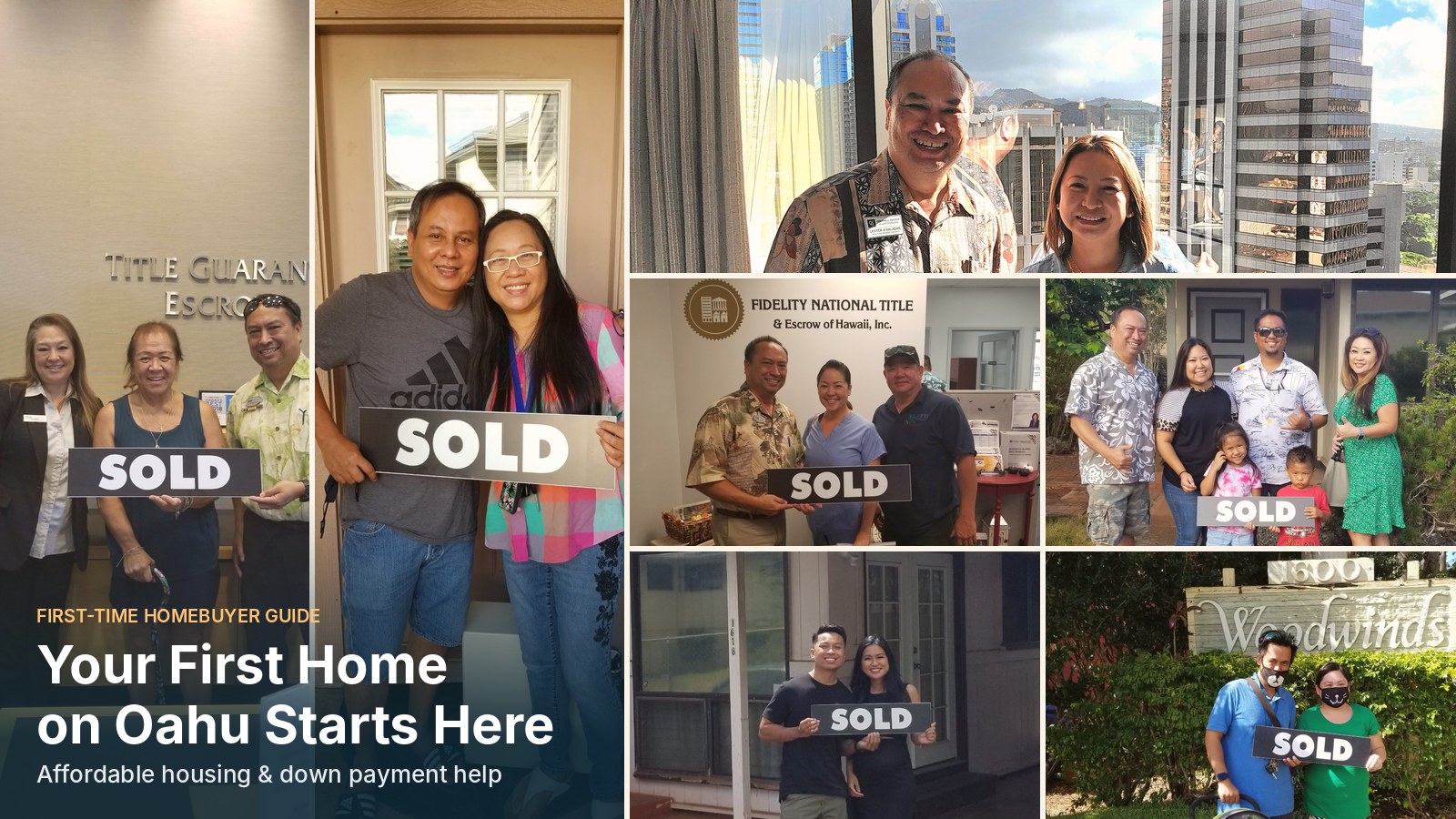
Let's be real for a moment. If you've scrolled Zillow lately and felt your stomach drop, you're not alone. The median price for a resale single-family home on Oahu was $1,110,000 in September 2026, and the year-to-date median is closer to $1.18 million. Add 30-year mortgage rates hovering around 7%, and it's easy to see why so many kamaaina families feel shut out of the market they grew up in.
But here's what I tell every first-time buyer who walks into my office: the median price is not your price. Thousands of local families buy their first home on Oahu every year by using state and county programs built for exactly their situation. These include below-market reserved housing units, mortgages with below-market rates, and down payment loans that can put tens of thousands of dollars on your side of the table.
Here's how it all works.
Understanding Honolulu Affordable Housing & Reserved Housing Programs
How Developer-Built Affordable Units Work
Two state agencies run most of Oahu's for-sale affordable housing:
- HHFDC (Hawaii Housing Finance & Development Corporation) partners with developers statewide, offering financing, tax breaks, and faster approvals in exchange for a share of homes priced for local income levels.
- HCDA (Hawaii Community Development Authority) oversees development in districts like Kakaako. Its Kakaako reserved housing program requires many high-rise developers to set aside units sold below market to income-qualified buyers.
In practice, this means you'll find new affordable condos and townhomes in places like Kakaako and Moiliili in town, master-planned communities like Koa Ridge in Central Oahu, and Ewa and Kapolei in West Oahu. Prices are set by formula based on income, not by what the market will bear. Units are usually sold through an application and lottery process, which is why getting on interest lists early matters so much.
What Is Area Median Income (AMI)?
Area Median Income (AMI) is the midpoint income for a household in a given county. Half of households earn more and half earn less. HUD sets it every year, and it's adjusted by household size. For 2026, Honolulu County's median family income is $133,400.
Affordable projects are designated by AMI bands (for example, "units for buyers at 80% to 140% AMI"). Here are the 2026 HHFDC income limits for Honolulu County, effective May 1, 2026:
| Household Size | 80% AMI | 100% AMI | 120% AMI | 140% AMI |
|---|---|---|---|---|
| 1 person | $86,240 | $107,800 | $129,360 | $150,920 |
| 2 people | $98,560 | $123,200 | $147,840 | $172,480 |
| 3 people | $110,880 | $138,600 | $166,320 | $194,040 |
| 4 people | $123,200 | $154,000 | $184,800 | $215,600 |
The surprise for most people: a household of four earning up to $215,600 can still qualify for some 140% AMI units. Many two-income local families fall well within these ranges. Note that individual projects set their own caps, so always check the specific listing.
The Fine Print: Buyback & Shared Appreciation Equity (SAE)
Affordable units come with strings attached. They exist to keep these homes affordable for the next local family. Here's what they mean in plain English:
- 10-Year Buyback Restriction: If you sell or transfer your HHFDC home within the first 10 years, HHFDC gets the first option to buy it back. This prevents quick flips and keeps the home owner-occupied. The restriction expires automatically 10 years after your deed is recorded.
- Shared Appreciation Equity (SAE): When you eventually sell, transfer, or rent the home, you share a set percentage of the home's net appreciation with the State. Unlike the buyback, SAE doesn't expire on its own. It stays with the title until the State's share is paid.
Is that a deal-breaker? Usually not. You still build equity, get stable payments, and pay down your own mortgage instead of a landlord's. Many owners use their affordable unit as a stepping stone to their next home. Kakaako HCDA reserved housing has similar but separate rules that depend on when the project was built, so read your project's restrictions carefully. I'm always happy to walk through them with you.
Oahu First-Time Homebuyer Programs: Down Payment Assistance & Financing
Hale Kamaaina Mortgage Program (HHFDC)
Formerly known as Hula Mae, this is the state's flagship first-time buyer loan. It offers:
- Competitive 30-year fixed rates, often well below market. Rates change with each bond issue, so ask a participating lender for today's rate.
- Optional down payment assistance of 4% of the loan amount. This is a soft second mortgage at 1% simple interest, and it's deferred until you sell, refinance, or pay off the loan.
- To use the 4% assistance, you'll typically contribute 5% of the sales price yourself.
Already heard of Hula Mae? It's the same program under its new name. If someone points you to "Hula Mae," ask for Hale Kamaaina.
City & County of Honolulu Down Payment Loan
This is one of the best deals on the island:
- Up to $40,000 at 0% interest, with no loan fees
- Repaid over a 20-year term
- You contribute at least 5% of the purchase price from your own funds
- You must complete a City-approved homebuyer course and live in the home as your primary residence
Funds are limited and awarded first-come, first-served, so start early.
HHOC Down Payment Assistance Loan (DPAL)
The nonprofit Hawaii HomeOwnership Center offers:
- DPAL: up to $125,000 in deferred down payment assistance, with as little as 3% down and no mortgage insurance, for buyers at or below 120% AMI
- Deferred Closing Cost Loan: contribute $2,500 and receive up to $15,000 in matched assistance
OHA Access to Home Ownership (AHO)
For Native Hawaiian buyers, the Office of Hawaiian Affairs' AHO program, offered in partnership with American Savings Bank, allows purchases with as little as 3% down and no mortgage insurance. OHA's deposit backs the loan. Eligibility requires Hawaii residency and verification through OHA's Hawaiian Registry.
Pro tip: Some of these programs can be layered together. A lender experienced with Hawaii assistance programs is essential for combining them correctly.
Basic Eligibility Checklist
Every program has its own rules, but most Oahu first-time homebuyer programs require:
- Hawaii residency (and U.S. citizenship or permanent residency)
- Age 18 or older
- First-time homebuyer status. You typically can't have owned a principal residence within the past 3 years. Some programs look back further or bar any current residential ownership.
- Owner-occupancy. You must live in the home as your primary residence. No rentals or vacation homes.
- Income within program limits (see the AMI table above)
- HUD-approved homebuyer education. Complete a course through a HUD-approved counseling agency such as HHOC. Many programs won't close without the certificate.
Your Path Home Starts Now
Buying on Oahu takes patience, planning, and the right team. It is absolutely within reach. The families who succeed aren't necessarily the ones earning the most. They're the ones who prepare early, understand the programs, and act quickly when the right unit opens up.
Here's your next step:
- Get pre-approved with a participating local lender, ideally one approved for Hale Kamaaina and experienced with City and HHOC assistance.
- Take a HUD-approved homebuyer class now. It's required for most programs and makes you application-ready.
- Join project interest lists early for upcoming Kakaako reserved housing, Central Oahu, and West Oahu affordable developments. Lotteries reward those who are first in line with documents in hand.
Ready to map out your realistic path to homeownership? Reach out today for a free, no-pressure consultation. We'll look at which programs fit your ohana and build a game plan together. Your first home on Oahu might be closer than you think.
Program terms, rates, and income limits change frequently. Always confirm current details with HHFDC, the City and County of Honolulu, HHOC, OHA, or a participating lender before applying.