


By Lester A. Salazar, Broker and Team Leader, The Salazar Group | Premier Island Homes Hawaii
Aloha friends,
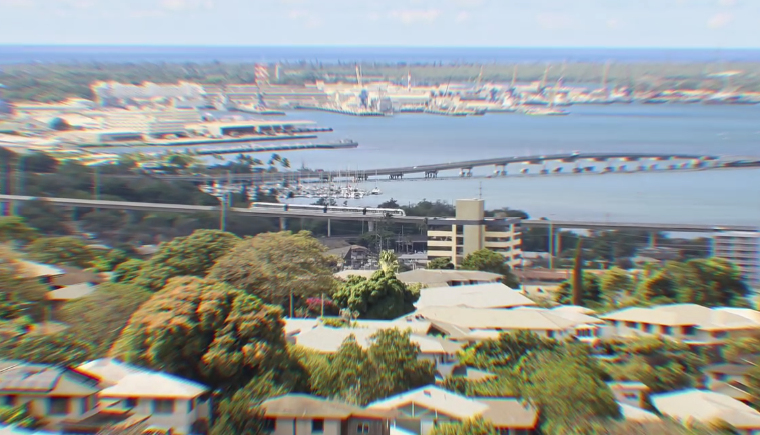
If you've been following Honolulu rail as long as I have, you know the story has had more twists than the H-3. So when Civil Beat reported this morning that a HART board subcommittee is recommending a study of extending Skyline at both ends, east to Ala Moana Center and west to central Kapolei, I read it closely. My take: this is the right direction, and it's worth our attention as homeowners, buyers and neighbors.
What's being proposed
Here is the plan in plain terms, based on Civil Beat's reporting by Kevin Dayton:
- Town end: About 1.2 more miles of elevated guideway through Kaka'ako to Ala Moana Center, with two new stations. Rough estimate: $2.2 billion to $2.5 billion.
- Kapolei end: About one more mile of guideway to a new station near Ka Makana Ali'i. Rough estimate: $2.0 billion to $2.3 billion.
- Combined: $4.2 billion to $4.8 billion (low end: $2.2B + $2.0B; high end: $2.5B + $2.3B).
- Next step: A feasibility study first. If the extensions prove viable, the subcommittee recommends HART move on to design, planning and construction. The full HART board is scheduled to receive the report today.
- Support so far: Mayor Rick Blangiardi endorsed extending the line in both directions in a Sept. 29 letter, and the state Office of Planning and Sustainable Development is also backing the proposal.
For context, the line now under construction is about 18.9 miles and roughly $10 billion, and it was shortened to end in Kaka'ako rather than at Ala Moana to stay within budget. The first two segments, from East Kapolei to Middle Street, are open today. HART's CEO has said the full line as currently planned may not open until 2032.
Why I'm in favor
1. A train should go where people actually go. Ala Moana is one of the busiest destinations on the island, for shopping, for work and as a bus hub. Ending the line a short distance away has always felt to me like building a bridge that stops just shy of the other bank. The subcommittee's own report says the currently funded alignment falls short of Skyline's ridership potential, and I agree.
2. It serves both ends of where Oahu is growing. The report notes extensive development in both Ala Moana and Kapolei over the past 20 years. Kapolei is where many local families have found homes they can afford, and Kaka'ako and Ala Moana are where many of them work, shop and visit. Connecting those two ends makes the whole system more useful, not just the new stations.
3. Transportation is part of the housing conversation. In my opinion, the value of a home on Oahu is tied to more than the house itself. It's also about how you get to work, school and everything else. A rail line that reaches real destinations gives families another way to get around, and state lawmakers are already asking about plans for housing along the line. That's exactly the conversation we should be having.
4. Finishing the job protects the investment we've already made. We have roughly $10 billion committed to this system. To me, a modest added stretch at each end that helps the whole line carry more riders is a smart way to get more out of what's already been built.
5. Many stakeholders want to go even further. According to the report, stakeholders repeatedly told the subcommittee they support extending rail all the way to UH Manoa to help with rush-hour traffic. Ala Moana is a logical step in that direction.
Ride it for yourself
The best way to form an opinion about Skyline is to ride it. I recently took my first ride, from UH West Oahu to the Airport, and shared the experience here: Watch my first Skyline ride on Instagram. If you haven't been on yet, go take a ride and see the island from a whole new angle.
The honest part: how do we pay for it?
I'd be doing you a disservice if I didn't talk about the hard questions. Skyline was budgeted at about $5 billion when construction began in 2011, and it needed financial help from the Legislature and City Council in 2015, 2017 and 2021. A federal consultant has also warned that costs may be climbing again.
The most likely funding path would be asking the Legislature to extend Honolulu's half-percent general excise tax surcharge for rail. That surcharge raises about $360 million a year and is set to expire at the end of 2030. House Finance Chair Chris Todd said it's too early to tell, pointing to the state's large backlog of deferred maintenance and other needs.
Those are fair concerns, and I think the answer is strong oversight, clear reporting on how every dollar is spent, and a serious plan for homes near the stations. But I don't think the answer is stopping just short of the finish line.
What this means for you
If you own or are thinking about buying in Kapolei, Ewa, Kaka'ako or the Ala Moana area, this is a story to watch. The proposal is still early, with a feasibility study, legislative decisions and years of work ahead, so please don't make a buying or selling decision based on a line that hasn't been approved yet. What I can do is help you understand what's on the table and how transportation fits into your plans.
Have questions about the market near the rail line? Give us a call at (808) 204-4663 or reach out through our website. We're always happy to talk story.
Mahalo,
Lester A. Salazar, REALTOR®, RB-23849
Broker and Team Leader | The Salazar Group | Premier Island Homes Hawaii
Coldwell Banker Island Properties
Source: Kevin Dayton, "New Plan Aims To Extend Honolulu Rail Line For An Extra $4 Billion," Honolulu Civil Beat, Oct. 23, 2026. Opinions are my own. Cost figures are the subcommittee's rough estimates and may change.